SKU: 33348022403
typical japanese dress

typical japanese dress 151 Japanese Hakama & Kataginu

Sale price$24.52 Regular price$27.24
Save 10%
Size: 4

Shipping Estimate
USA
  • USA
  • CAN

Ships within 48 hours · Estimated delivery Jul 14 - Jul 19

Promo Codes Available:

For Your Every Summer RSVP, with Code: SUMMER15

Description

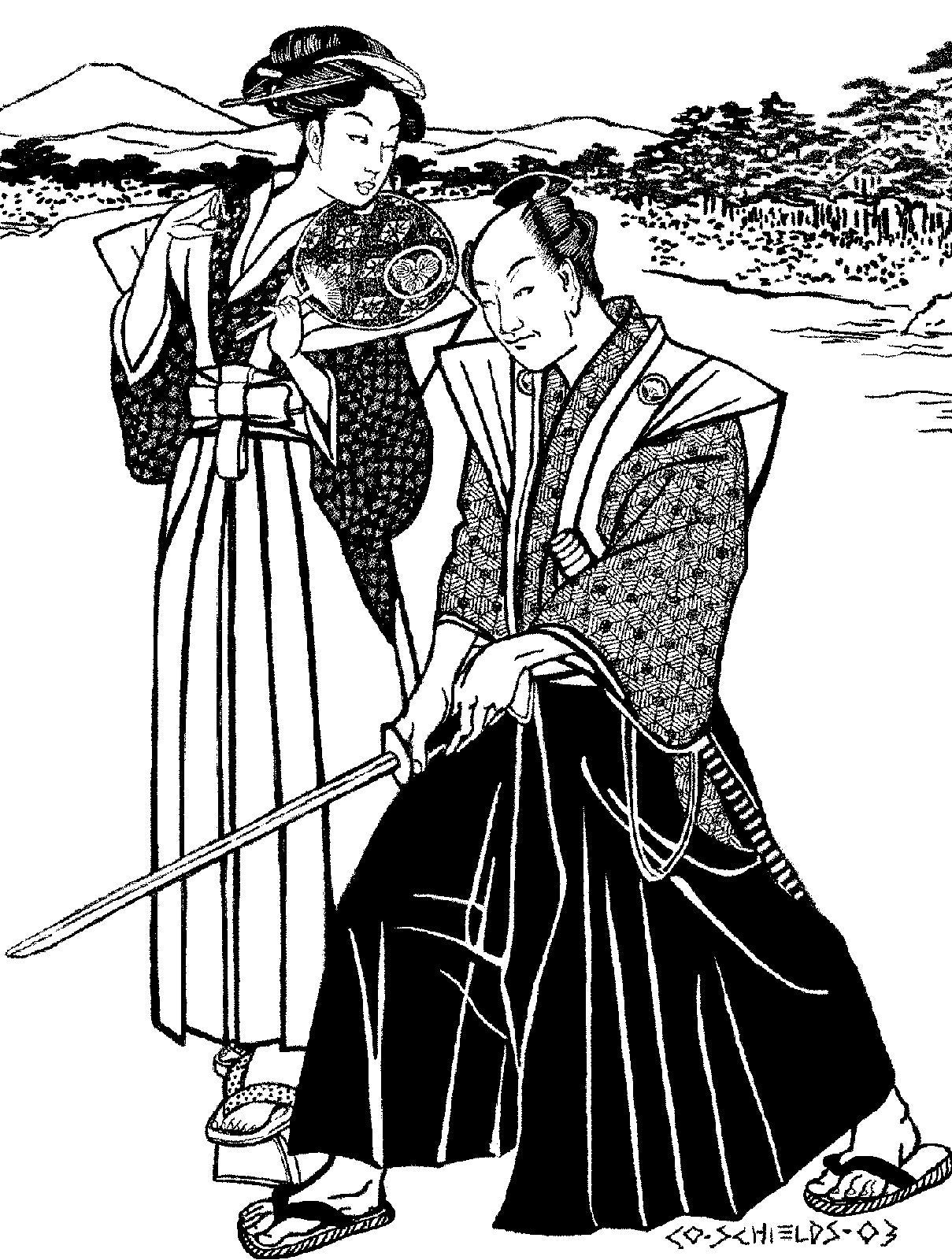
typical japanese dress 151 Japanese Hakama & KataginuHakama for men and women, all sizes based on waist measurement. Kataginu in one size. During the Edo period in Japan (1615 1868), members of the samurai or warrior class wore the Kamishimo, a traditional costume made up of the Kataginu or pleated front vest and Hakama or pleated pants skirt. The two garments were typically worn over a knee length kimono for formal occasions. Today, the garments are frequently worn for official occasions, martial arts,

Hakama for men and women, all sizes based on waist measurement.
Kataginu in one size.

During the Edo period in Japan (1615-1868), members of the samurai or warrior class wore the Kamishimo, a traditional costume made up of the Kataginu or pleated-front vest and Hakama or pleated pants/skirt. The two garments were typically worn over a knee-length kimono for formal occasions. Today, the garments are frequently worn for official occasions, martial arts, and historic reenactment.

Since the Hakama is simply a large rectangle of fabric that is pleated to fit your body, the pattern does not have a large rectangle pattern piece (waste of paper!). Instead, there are complete instructions for measuring, cutting, and pleating the traditional Hakama skirt/pant in any size. The pattern does include actual pattern pieces for Small, Medium-Large, and Sumo-Size Koshiita (Backboard) and Koshiita Triangles. For contemporary sportswear, pattern also includes instructions for optional side panels to fill in the side-seam gaps that expose the underlying kimono in traditional wear.

The wide-shoulder Kataginu can be made to match the Hakama for a traditional samurai appearance or as a contrasting wearable art accent. Easy to pleat and sew, it completes a dramatic outfit.

Suggested Fabrics: For Kataginu: Crisp, tightly woven cottons; linens and linen blends; ramie; hemp; silks, including shantung, habotai, pongee, satin, or taffeta. Note: You may have to starch fabric to preserve pleats. For Hakama: Same as Kataginu, but also lightweight wool suiting.

NOTE: The Thai blouse (yellow) from 134 Southeast Asian Tops & Wraps is paired with the Hakama in these photos (and traditionally wraps right over left, unlike Japanese garments, which wrap left over right for living people).

Yardage chart (.pdf)

This pattern is available as a Paper pattern and PDF pattern. Choose the
pattern format you want in the drop down menu. The PDF pattern has instructions and files for copy shop (36” and A0), print at home (A4 and 8.5”x11”)

LEARN MORE:

  • For how to make the hakama larger than 42" waist, we have a PDF that explains, in detail, how to use your own measurements to make the hakama.  
  • Sewing Tip:  Fran S. from Canada completed the hakama, which she says got a nice reception at her dojo, and offers these helpful hints: It should appear that there are five, not six, pleats in the front of the hakama (for the five virtues, which are benevolence, justice, courtesy or propriety, integrity and wisdom), so make sure the overlapping pleats at center front overlap enough so they don't pull apart; she suggests a little more than the 3/4" in the pattern, especially if you use a heavy fabric. Also, make sure the back himo are long enough; she suggests they should be 3/4 the length of the front himo rather than the 1/2 as directed in the pattern. Fran also recommends Supertex for the backboard stiffener. It is a bookbinding board/leather mix used in handbags and luggage that offers "just the right combination of stiffness and flexibility." She says it comes in different weights, but is not washable.
  • A customer from Pennsylvania shares the following: "The pattern suggestions for the side stiffening of the Kataginu note that whalebone was traditionally used, and now thin slices of bamboo are used.  Even though I have access to bamboo, I use sport webbing. I cut a wide webbing to 3/8" (1cm) and sew it to the Kataginu edge, then turn it under twice for a clean finish (and so I don't have to make a casing)."
Shipping Notes
  • Free Standard Shipping on $100+ Orders to the USA.
  • Except Preorder products are shipped in 48 hours.
  • Delivery to the USA:
  1. Standard Shipping : 3-10 business days
  • If time is of the essence, please consider selecting expedited delivery for faster service.
Exchange/Return Notes
  • We offer a 30-day return/exchange service after receiving.
  • Final sale items are not eligible for returns or exchanges.
  • To process your return/exchange, please contact us at [email protected]
  • Please click here for more details>>> Return & Exchange Policy
SKU: 33348022403

Discover Niche Categories That Outsell typical japanese dress

Top-Converting Item to Boost Your Average Order

4.3 ★★★★★
Based on 1963 reviews
Sort
Highest Rating
Newest First
Oldest First
Product Reviews
C
Verified Purchase
christopher laughlin
New York, US
★★★★★ 5
Best socks ever! Wool blend keeps my feet cushioned.
Size: Large, Color: Color Mix
Anyone complaining about it not feeling like real wool didn't read the description, it says wool blend. They are the most comfiest socks I have ever purchased! They fit well they keep my feet warm . They don't sweat in hot weather. I almost forgot I had them on this evening. Best socks ever!!!!
WAS THIS REVIEW HELPFUL?YesReportShare
Reviewed in the United States on May 8, 2026
M
Verified Purchase
Mark & Jenn
Port Orchard, US
★★★★★ 5
Comfy & amazing!!!
Size: Medium, Color: Colorful, Size: Medium, Color: Colorful
Oh my goodness! I have never been obsessed with a pair of socks but, here we are. They are thick which I usually dislike but they don’t feel thick even with my chuck taylors on, I usually have either sweaty or cold feet they are neither in these. Love love love the colors so vibrant, haven’t washed any yet will update on how it wears. No toe fuzzies, color transfer to feet, they fit so well, barely a seam…dare I say these are my perfect socks! Wish the price was not so much, which honestly for what I’m getting isn’t that bad but I’m poor… GO GO WOOL!!! BAA
WAS THIS REVIEW HELPFUL?YesReportShare
Reviewed in the United States on May 4, 2026
M
Verified Purchase
Matthew Cirillo
Chelsea, US
★★★★★ 4
Large a tad small for 11 mens supercomfy and well made
Size: Large, Color: Color Mixed(quarter Socks)
These are quality socks, but for me the large are a bit small at size 11 shoesize. They are warm in any conditions, and warm days they can feel a bit stiffling, and I have probably sweatier than average feet, so without well ventilated shoes, my feet still get damp. They are so soft and cozy in cooler/cold weather. But again, it the heat, with some sweat, this makes them a bit "slippery" and my feet slide in my shoes on steep off-camber terrain. I would probably buy these again, except I have 6 pairs, and my wife buys me expensive branded socks I'd never purchase for myself.
WAS THIS REVIEW HELPFUL?YesReportShare
Reviewed in the United States on March 25, 2026
K
Verified Purchase
Kindle Customer
Draper, US
★★★★★ 5
Awesome hiking socks!
Size: Large, Color: Grey
Very comfortable and durable. I'm very happy with the quality of these sicks. I wear a mens size 11 shoe. The back of the sock come up about 1/2" above the back of my shoe. They are a perfect fit. I couldn't be happier with these. They are just the right thickness, too.
WAS THIS REVIEW HELPFUL?YesReportShare
Reviewed in the United States on April 17, 2026
Y
Verified Purchase
Yan Wu
Chelsea, US
★★★★★ 5
Improved my foot health
Size: Medium, Color: Color Mix
I’ve been dealing with athletes foot for decades and using daily maintenance medication for longer than many people reading this have been alive. I generally don’t have any issues other than I always at least one or two nails that are cloudy and brittle. I’ve tried synthetic blends in the past but this just seemed to make things worse so I always go back to cotton. I was been reading about the benefits of wool so I thought I would try these socks. I had several clouded nails at the time but in just a few weeks of wearing wool socks I noted subtle improvements. At the time of writing this it has been over 4 months of wearing wool socks exclusively and all my nails are completely clear and healthy! I honestly can’t believe it since I haven’t had seen completely healthy nails since I was a teenager. I do continue to use daily antifungal maintenance medication but the only change has been the wool socks. I think part of the issue was the cotton socks being soaked with sweat when I took them off at the end of the day regardless of the season or activity levels. The wool socks, however, are usually dry. Even after taking them out of a hiking boot on a hot day on the trail they will feel damp but not soaked. Consequently, they dry out completely on a rock while taking a short break. By staying dry they don’t bind up and cause hot spots like cotton socks. That, and I think they just distribute the heat better than cotton and I wouldn’t be surprised if they are actually cooler on hot days. Of course, in cooler temps they are warmer and I did appreciate how much so until the other day when I wore some cotton socks that felt like I was wearing ice cubes on my feet when I was walking around my hard wood floors at the end of the day. With these particular wool ankle socks I did note a hole around the toes with a couple of the socks after a few washes. My experience with cotton socks is that even the smallest of holes will grow exponentially with each use and so I generally just discard them. At first, I was disappointed thinking that these socks would not last but it does not appear that the holes grow like cotton. In fact, I haven’t thrown one wool sock away. My eyes aren’t great at close distant but it seems like the holes I noticed disappeared. Even if they didn’t it doesn’t matter since they do not currently seem to be a problem. I haven’t had these socks long enough to notice any thinning at wear points like cotton socks but I suspect that since they don’t bind like cotton they are less prone to wear. I now have a dozen pairs of wool ankle socks and I’ve gotten in the habit of putting them in a separate bin for washing otherwise they end up getting tumble dried with the rest of the family’s close. They have been in drier a number of times and I suspect they look a little more aged as a result. If I wash them separately with other delicate items I just lay them out on the floor after washing since they aren’t noticeably wet after a spin cycle and they completely dry out overnight. At this point I would rather put on a pair of wool socks straight out of the washer then put on dry pair of cotton socks since the results would be the opposite at the end of the day.
WAS THIS REVIEW HELPFUL?YesReportShare
Reviewed in the United States on October 21, 2024

recommand products